
Why using one dog to correct another is an unnecessarily risky approach, what dogs actually learn from social interactions, and why teaching owners to manage and guide their dogs is a safer alternative.
There's a training approach that still appears within parts of the dog training industry where dogs are deliberately introduced to other dogs who are expected to correct their behaviour, teach them boundaries or show them what is and isn't acceptable.
You might hear these dogs described as 'corrector dogs', 'teacher dogs' or well-socialised dogs who will put another dog in its place.
The theory is that dogs understand one another better than humans do, and that allowing a more confident or socially appropriate dog to correct an excitable, pushy or socially inexperienced dog will teach them how to behave.
But should we really be relying on one dog to teach another dog manners?
And more importantly, what are the potential consequences for both dogs involved?
Dogs naturally communicate with one another. They use body language, vocalisations, movement and physical interactions to communicate boundaries and preferences. However, there is a considerable difference between allowing appropriate, voluntary communication between compatible dogs and deliberately using one dog to intimidate, challenge or correct another.
As trainers, our responsibility is to teach dogs appropriate behaviours, not outsource that responsibility to another dog and hope the interaction produces the desired result.
There are safer, more controlled and more predictable ways to develop appropriate social skills, and they start with the handler.
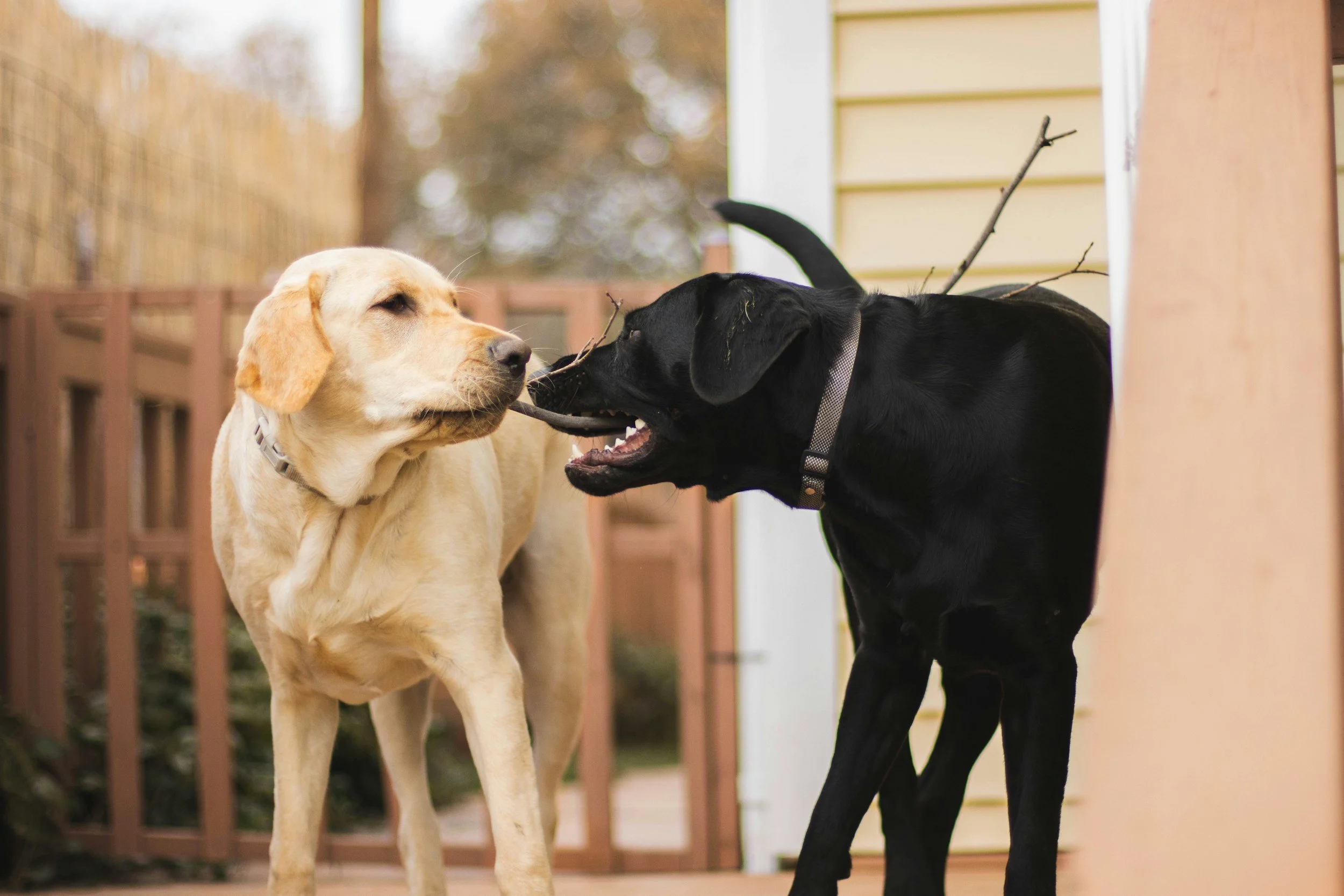
Do dogs naturally correct one another?
Dogs have sophisticated social communication systems.
When interacting, they can communicate through changes in posture, facial expressions, movement, vocalisations and physical contact.
For example, a dog might:
Turn their head or body away to communicate disinterest.
Move away from an interaction they don't want.
Use facial expressions or changes in posture to communicate discomfort.
Vocalise when another dog approaches too closely.
Use a growl or snap to communicate that an interaction needs to stop.
These behaviours are part of normal canine communication.
Dogs can also learn about one another through experience, including which individuals they enjoy spending time with, which interactions they find rewarding and which individuals they prefer to avoid.
However, this doesn't mean every dog is equipped to teach another dog appropriate social behaviour.
Dogs have individual temperaments, experiences, tolerances and communication styles. One dog's response to another dog's behaviour might be very different from what we would consider an appropriate or productive response.
A confident, tolerant dog might simply move away from an overexcited dog. Another might become uncomfortable and respond defensively. Another might escalate an interaction into a confrontation.
We cannot assume that a dog will deliver an appropriate correction, that the other dog will understand it in the way we intend, or that the outcome will be beneficial.
Natural canine communication is not the same thing as structured training.
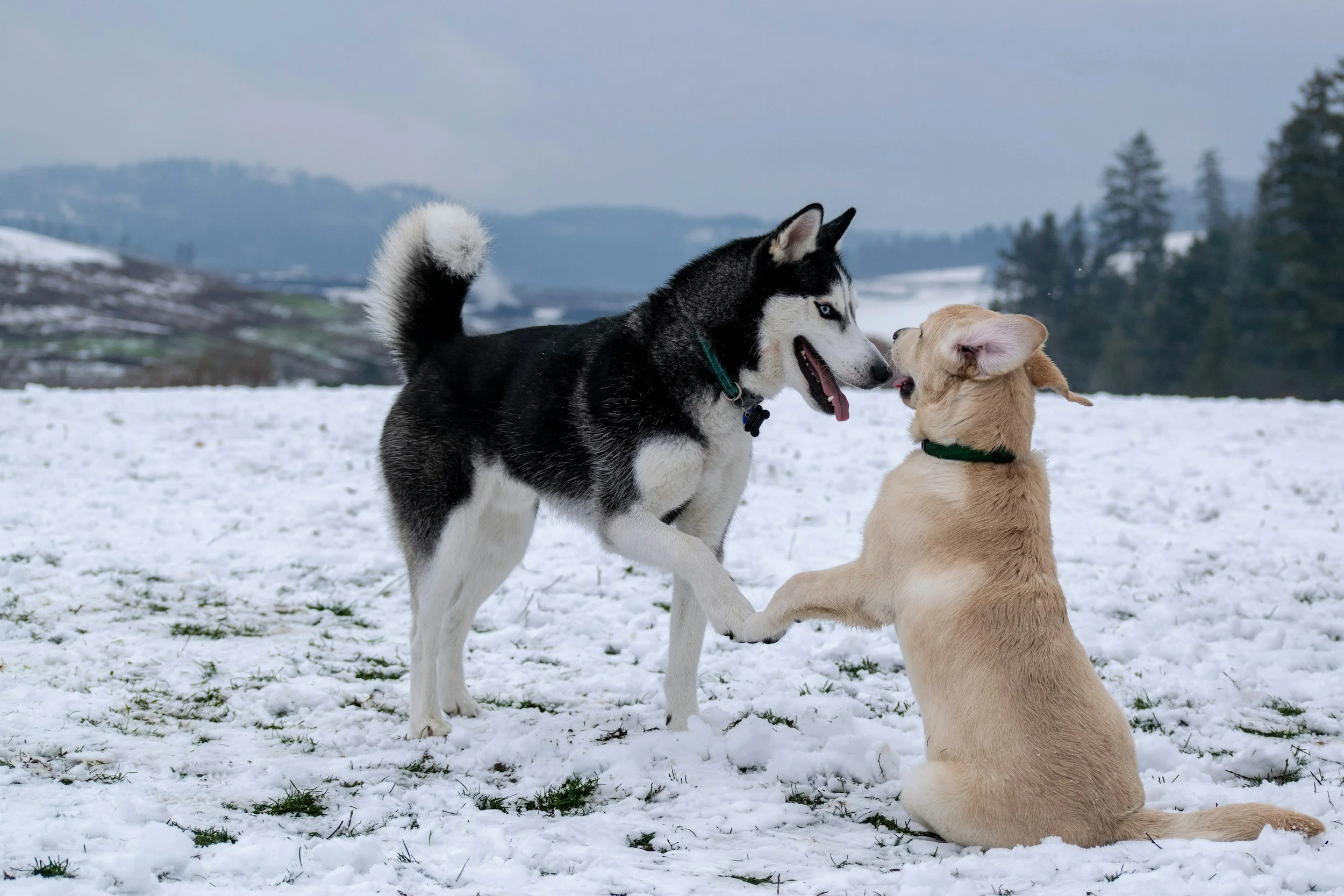
The misconception that dogs need other dogs to teach them manners
One of the arguments used to justify this approach is that dogs need to learn appropriate social behaviour from other dogs.
There is some truth to the fact that dogs learn through social experiences. They can observe other dogs, respond to their communication and develop preferences based on previous interactions.
However, that doesn't mean we need to deliberately put dogs into situations where another dog is expected to correct them.
Consider a young dog who is overly enthusiastic when approaching other dogs. They might jump into their space, repeatedly attempt to initiate play or struggle to recognise when another dog has lost interest.
Does that dog need an unfamiliar dog to growl, snap or physically challenge them to learn appropriate behaviour?
No.
We can teach the dog to approach calmly, respond to their handler, disengage when asked and respect the space of other dogs without exposing either animal to an unnecessary confrontation.
The same applies to dogs who are socially frustrated, excitable, pushy or lacking experience around other dogs.
These are skills that can and should be developed through training and controlled exposure.
We shouldn't rely on another dog's tolerance, patience or willingness to defend its boundaries to compensate for a lack of training and management.
The risks and potential fallout for both dogs
This is where I have significant concerns about deliberately using dogs to correct other dogs.
When we introduce two dogs with the expectation that one will correct the other, we're placing responsibility for the outcome on animals whose responses we cannot reliably predict.
There are several potential risks.
1. The interaction can escalate into aggression
A dog being used to correct another might initially display a warning signal, but that doesn't mean the other dog will understand it, respond appropriately or disengage.
An excitable dog might ignore the communication, become more aroused or respond defensively.
The interaction can escalate from a growl or snap into a physical confrontation.
Even dogs with generally excellent social skills have limits. We cannot assume that a dog will tolerate repeated unwanted approaches or respond proportionately every time.
A dog that is deliberately placed in the position of having to correct others may eventually become less tolerant of those interactions.
2. The dog being corrected can develop negative associations
Imagine a dog who is already uncertain around other dogs or struggles with social interactions.
They are introduced to a dog who is expected to correct their behaviour.
If that interaction involves intimidation, confrontation or physical contact, the experience may make the dog more uncomfortable around other dogs.
Rather than learning that other dogs are safe and predictable, they may begin to associate their presence with unpleasant experiences.
This can contribute to fear, defensive responses or increased reactivity.
A dog who previously approached other dogs enthusiastically might subsequently become more defensive or avoidant.
We also need to recognise that a dog who appears to have stopped displaying unwanted behaviour isn't necessarily more comfortable. Behavioural suppression and a genuine improvement in the dog's emotional response are not the same thing.
3. The dog doing the correcting can suffer consequences too
This is an aspect that often gets overlooked.
The dog being used as the 'teacher' is also being placed in a potentially unfair position.
They may be repeatedly exposed to dogs who invade their space, ignore their communication or display behaviours they find uncomfortable.
They may feel the need to escalate their responses to make themselves understood.
There is also a risk of injury if an interaction develops into a fight.
Just because a dog is confident, well-socialised or generally tolerant doesn't mean they should be expected to manage the behaviour of other dogs.
We should not repeatedly put a dog in situations where they are expected to defend their boundaries on behalf of a trainer.
A suitable social companion should be able to enjoy an interaction, not be used as a piece of training equipment.
4. It can teach the wrong lesson
The intention might be to teach a dog appropriate social behaviour, but the outcome isn't guaranteed.
A dog might learn to avoid other dogs, become defensive when approached or respond more quickly with aggressive behaviour.
Another might learn that interactions with unfamiliar dogs are unpredictable and that they need to become more forceful to protect their own space.
Neither outcome is what we should be aiming for.
We also cannot assume that a dog understands a correction in the context intended by the trainer.
Learning is influenced by the immediate environment, previous experiences, emotional state and the consequences the dog associates with an interaction.
A confrontation doesn't automatically teach the desired alternative behaviour.
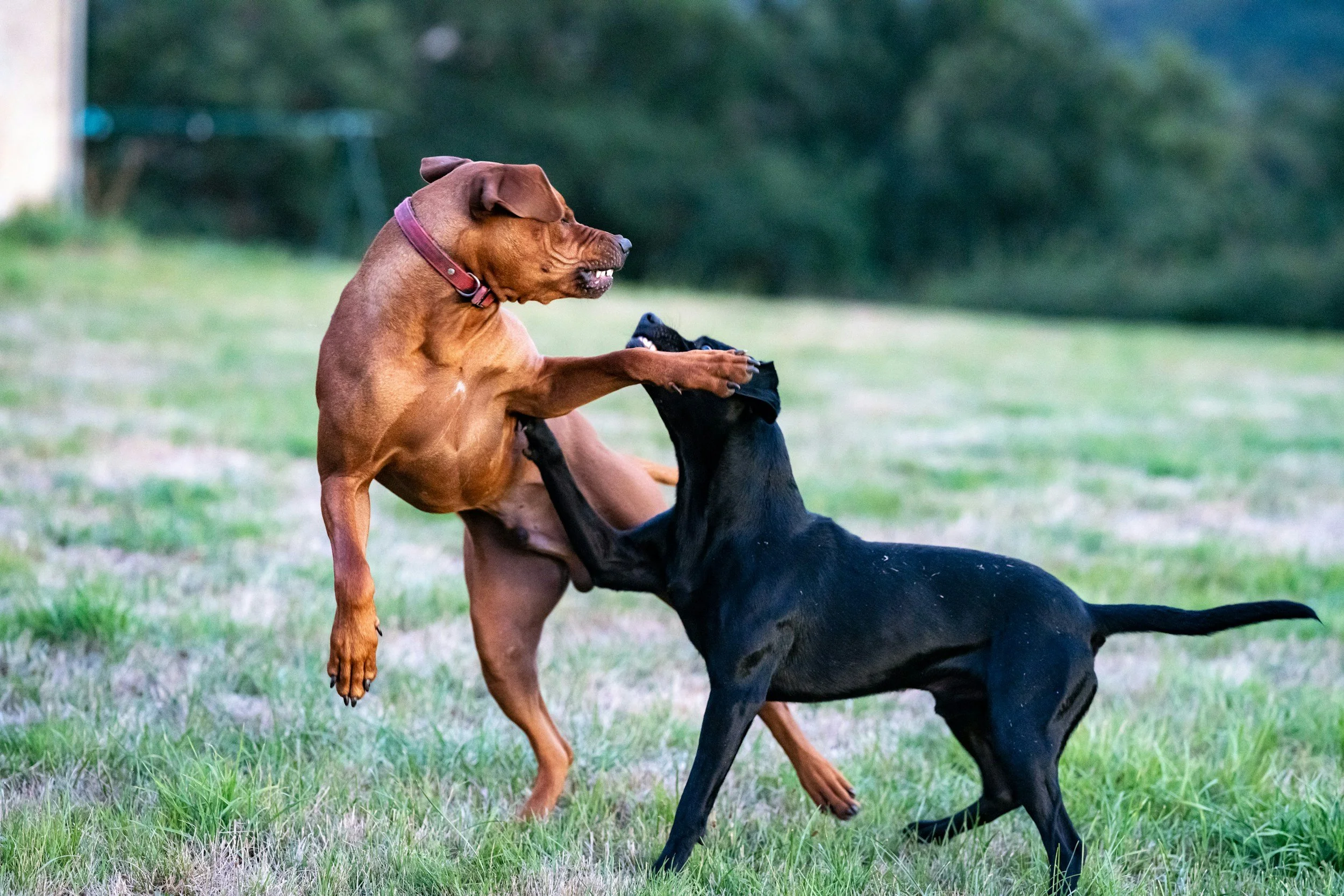
Why is this considered an outdated training approach?
The idea that dogs should simply be allowed to sort things out between themselves has historically been linked to outdated interpretations of canine social hierarchies and dominance theory.
Dogs were often viewed as animals who needed to establish their position within a group, with more confident or dominant individuals expected to correct those who behaved inappropriately.
However, our understanding of canine behaviour has developed considerably.
Modern behavioural science recognises that dogs have complex social relationships influenced by individual experiences, communication, resources, context and learning.
The idea that dogs need to establish a rigid hierarchy or that one dog should be allowed to dominate another to teach appropriate behaviour is not a sound basis for training.
Dogs communicate, form relationships and make decisions about which individuals they choose to interact with. This doesn't mean they are naturally equipped to act as behavioural instructors for unfamiliar dogs.
The training industry has also developed considerably. We now have a much better understanding of learning theory, behaviour modification, emotional responses and the importance of managing risk.
Continuing to rely on confrontational interactions because 'that's how dogs teach each other' overlooks what we now understand about how dogs learn.
What does the evidence tell us about using confrontation in training?
It is important to distinguish between research specifically examining dogs used as correctors and the broader scientific evidence about confrontational and aversive training methods.
There is not a strong body of controlled research demonstrating that deliberately using one dog to correct another is a reliable or beneficial way of teaching social manners.
However, we do have substantial veterinary and behavioural guidance explaining why methods involving intimidation, confrontation and aversive experiences carry welfare risks.
We should be asking:
What is the dog learning?
What emotional association might they develop?
What are the potential consequences for both dogs?
Is there a safer way to achieve the same training objective?
Are we teaching an appropriate alternative behaviour?
A method shouldn't be considered successful simply because a dog stops doing something following a confrontation.
We need to consider the longer-term behavioural and emotional consequences.
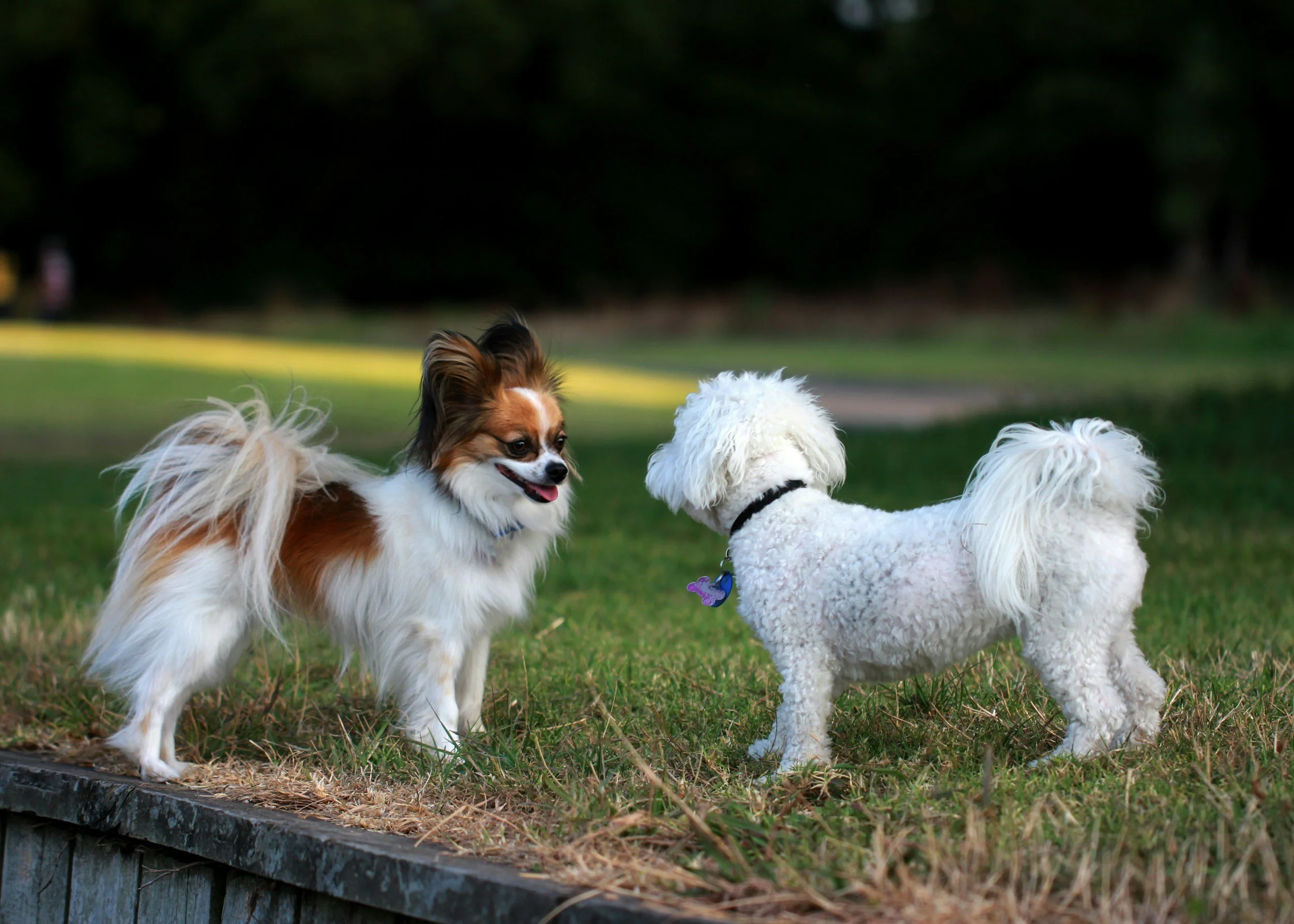
So, how should we teach dogs appropriate social behaviour?
The alternative is to take responsibility for teaching and managing our own dogs.
Rather than introducing a dog and hoping another dog will correct them, we can develop the necessary skills before expecting them to navigate direct social interactions.
This means building a foundation of communication, control and engagement with the handler.
1. Establish handler engagement
Before expecting a dog to navigate interactions with other dogs, they should have an understanding of how to engage with their handler.
This includes:
Responding to their name.
Offering attention when asked.
Following familiar cues.
Being able to disengage from distractions.
Understanding how to move with their handler.
Remaining responsive when something interesting is happening.
These skills provide the foundation for managing social situations.
If a dog cannot redirect their attention away from another dog, expecting them to manage an interaction independently is premature.
2. Develop a reliable recall away from other dogs
One of the most valuable skills an owner can teach is the ability to recall their dog away from another dog.
This shouldn't be something we only practise when the dog is already in an exciting situation.
Recall needs to be developed progressively, starting in low-distraction environments and gradually increasing the difficulty.
We want a dog who understands that responding to their handler and moving away from something interesting is a rewarding and familiar behaviour.
Before introducing direct interactions, owners should have a realistic understanding of how reliable their dog's recall is around distractions.
If a dog cannot be confidently redirected, they aren't ready for situations where they might need to disengage quickly.
Recall should not be treated as a guaranteed emergency brake. Management, appropriate equipment and controlled environments remain important, particularly around unfamiliar dogs.
3. Teach disengagement and redirection
Dogs need to learn that they can observe another dog without approaching them.
We can teach this by rewarding attention towards the handler, encouraging disengagement and practising changes of direction around suitable distractions.
The objective is to develop a dog who can notice another dog, process its presence and respond to their handler rather than becoming completely absorbed in the opportunity to interact.
This is particularly important for dogs who become overexcited, socially frustrated or reactive.
4. Build up exposure progressively
We shouldn't go straight from a dog being unable to remain calm around other dogs to expecting them to interact appropriately at close quarters.
Instead, we can introduce controlled exposure at a distance where the dog can remain comfortable and responsive.
This might involve:
Observing another dog from a suitable distance.
Walking parallel to another dog.
Practicing engagement and disengagement.
Gradually reducing distance where appropriate.
Changing direction and moving away when needed.
Introducing closer interactions only when the dogs are ready.
The pace should be determined by the individual dogs, not by a predetermined expectation that they should be able to interact by a certain point.
If either dog becomes uncomfortable, overexcited or unable to respond appropriately, we need to adjust the situation.
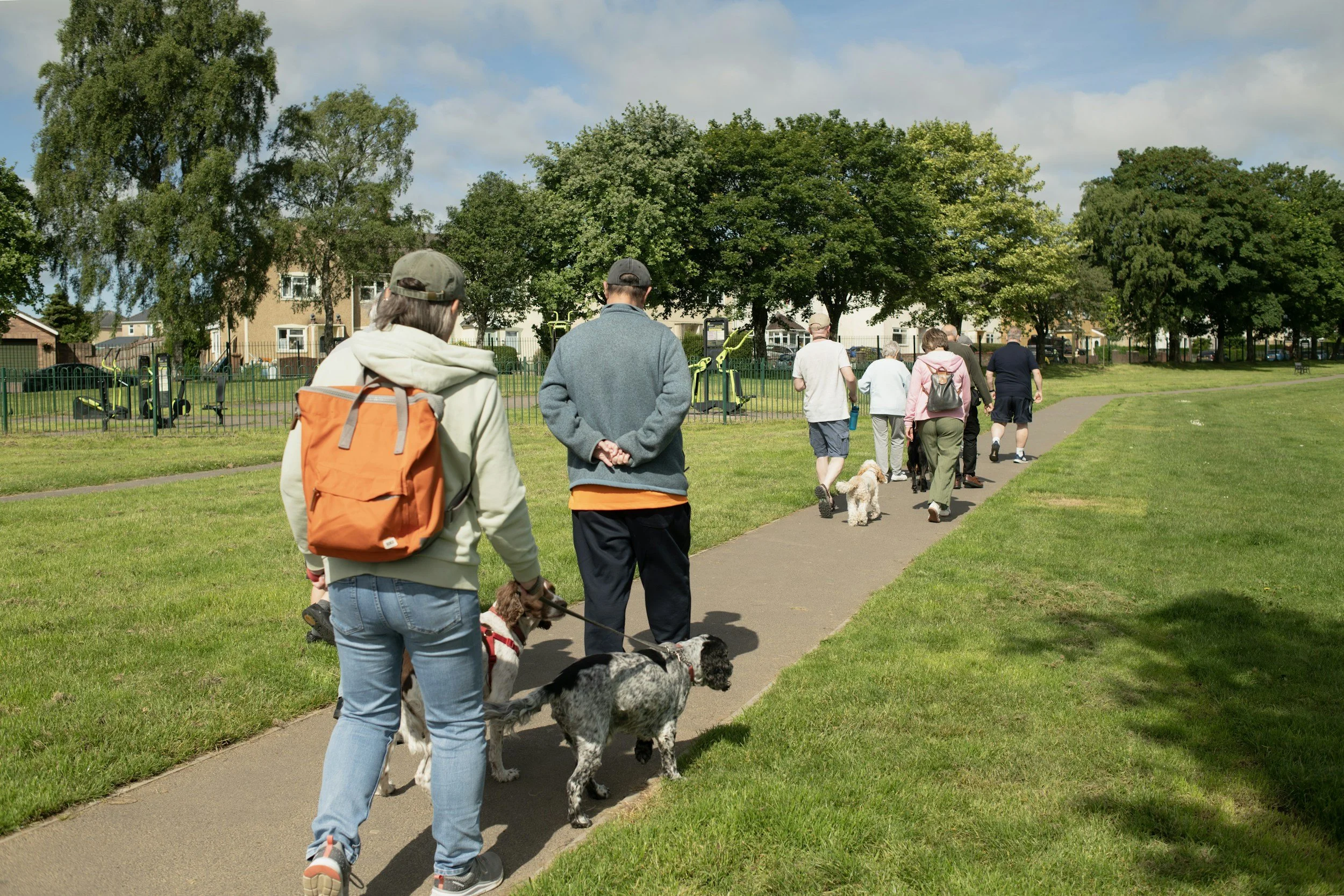
5. Introduce direct interactions responsibly
Once a dog has developed appropriate foundations, direct interactions can be considered where suitable.
This means selecting a compatible dog, choosing an appropriate environment and ensuring both handlers have the ability to manage and control their dogs.
We should be looking for mutually comfortable interactions rather than simply allowing dogs to approach and work things out.
Owners need to be able to:
Maintain appropriate control.
Recognise changes in body language.
Interrupt or redirect their dog when necessary.
Recall their dog away promptly.
Respect when either dog wants to disengage.
End an interaction before it becomes uncomfortable.
Direct interaction should be an opportunity for positive social experiences, not a test of whether one dog can tolerate another's behaviour.
The responsibility of a professional dog trainer
I believe this is where professional responsibility becomes particularly important.
As trainers, we are responsible for assessing the dogs in front of us, understanding their behaviour and recommending training methods that are appropriate for their individual needs.
We should never place any dogs at unnecessary risk to teach another something that we can teach through structured training.
If a dog is excitable, socially frustrated, pushy or struggling to respond appropriately around other dogs, it is our responsibility to develop a plan that addresses those difficulties.
It isn't the responsibility of another dog to correct them.
Equally, if we have a dog who is confident, socially appropriate and generally tolerant, that doesn't give us permission to repeatedly use them to manage other dogs!
Their welfare matters just as much.
There will always be some level of unpredictability when working with animals. We cannot eliminate every possible risk, but we can make informed decisions to reduce unnecessary exposure to situations where things could go wrong.
The principle of choosing the least risky effective method should be central to professional decision-making.
If we can teach a dog to recall away, disengage, redirect their attention and approach other dogs appropriately without exposing either animal to confrontation, why wouldn't we choose that approach?
It isn't about taking the easiest route or avoiding difficult training. It is about taking responsibility for the outcome.
Social skills should be taught, not outsourced
Dogs benefit from positive social experiences, and learning to communicate appropriately with other dogs is an important part of navigating their environment.
But there is a difference between allowing dogs to communicate naturally and deliberately using one dog to correct another.
We shouldn't confuse a dog defending their own boundaries with a dog being an appropriate teacher.
We shouldn't assume that a dog who corrects another has necessarily taught them anything useful.
And we certainly shouldn't overlook the potential consequences for either animal simply because the interaction appears to have stopped an unwanted behaviour.
We have the knowledge and training methods available to develop appropriate social skills without relying on confrontation.
We can teach our dogs to engage with us, respond to communication, recall away, redirect their focus and approach other dogs in a controlled and appropriate manner.
We can build towards closer interactions progressively, selecting suitable social companions and ensuring both dogs are comfortable.
Another dog shouldn't have to teach your dog what you haven't taught them yourself.
At ASCENDK9, my approach is to build the skills, communication and control that allow dogs to navigate social environments safely and confidently with guidance and advocacy from the handler.
I would much rather teach a dog how to make appropriate choices and give an owner the ability to manage an interaction than deliberately place two dogs in a situation where one is expected to correct the other.
Good training shouldn't be measured by how quickly we can stop a behaviour. It should always be measured by what the dog has learned, how they feel about the experience and whether we've achieved the outcome without creating unnecessary risk.