
The darker evenings and colder weather can make it harder to maintain the same routine with our dogs.
Walks might become shorter, outdoor activities can be less appealing and there are days when we'd all rather spend a bit more time indoors.
But while physical exercise is important, it's worth remembering that our dogs need opportunities to use their brains too.
Mental stimulation can be a valuable part of a dog's daily routine, helping to provide appropriate outlets for their natural behaviours, develop problem-solving skills and offer something different from their usual walks.
However, I think it's important to distinguish between simply keeping a dog occupied and providing activities that are genuinely fulfilling.
Buying endless enrichment toys or constantly finding ways to entertain your dog isn't necessarily the answer. Instead, we want to think about activities that allow them to use their natural abilities and develop useful skills.
Here are three ways I'd recommend incorporating more mental stimulation into your dog's winter routine.

1. Introduce scent work and searching activities
Dogs experience the world largely through their noses, so scent-based activities are a fantastic way to provide mental engagement.
Searching, tracking and investigating are natural behaviours for dogs, and giving them appropriate opportunities to use their noses can be incredibly rewarding.
The great thing about scent work is that it doesn't require much space or expensive equipment. You can introduce some simple exercises at home using your dog's normal food allowance.
A few ideas to try:
Food searches: Hide small portions of your dog's daily food allowance around a room and encourage them to find it.
Box searches: Place food in one of several cardboard boxes and allow your dog to investigate and locate it.
Scent trails: Create a short trail using pieces of food, gradually increasing the distance and complexity as your dog understands the exercise.
Find a specific toy: Encourage your dog to search for a familiar toy hidden somewhere within the room or garden.
Start with something relatively easy so your dog can understand what you're asking.
As they become more confident, you can introduce more challenging searches by changing the hiding places, adding different objects or increasing the area they need to investigate.
For dogs with strong scenting instincts, this can be particularly rewarding. It also gives owners an opportunity to learn more about their dog's natural interests and abilities.
2. Incorporate structured play into your routine
Play is an important part of many dogs' lives, but I think it's worth being a little more intentional about how we use it.
Rather than simply throwing a ball repeatedly or allowing play to become increasingly frantic, we can introduce some structure and use play as an opportunity to develop communication, engagement and self-control.
This is particularly useful for dogs with higher working drives, who may benefit from more purposeful outlets.
For example, you could introduce a simple toy-based exercise where your dog learns to wait for a release before accessing their toy.
A simple exercise to try:
Start with a toy your dog enjoys playing with.
Encourage them to engage with you and the toy.
Briefly pause the interaction and introduce a clear release cue, such as "get it".
Allow your dog access to the toy as their reward.
Practise bringing the toy back into the interaction and repeating the exercise.
As your dog becomes more familiar with the process, you can start building in short periods of engagement, waiting and disengagement.
You can also incorporate simple obedience into play, such as asking for a sit or down before releasing your dog to their toy.
The aim isn't to remove the fun from play. It's to develop a more purposeful interaction where your dog learns to engage with you, understand your communication and transition between excitement and control.
For some dogs, structured tug, retrieving or toy-based training can be a much more appropriate outlet than simply trying to exhaust them with repetitive exercise.
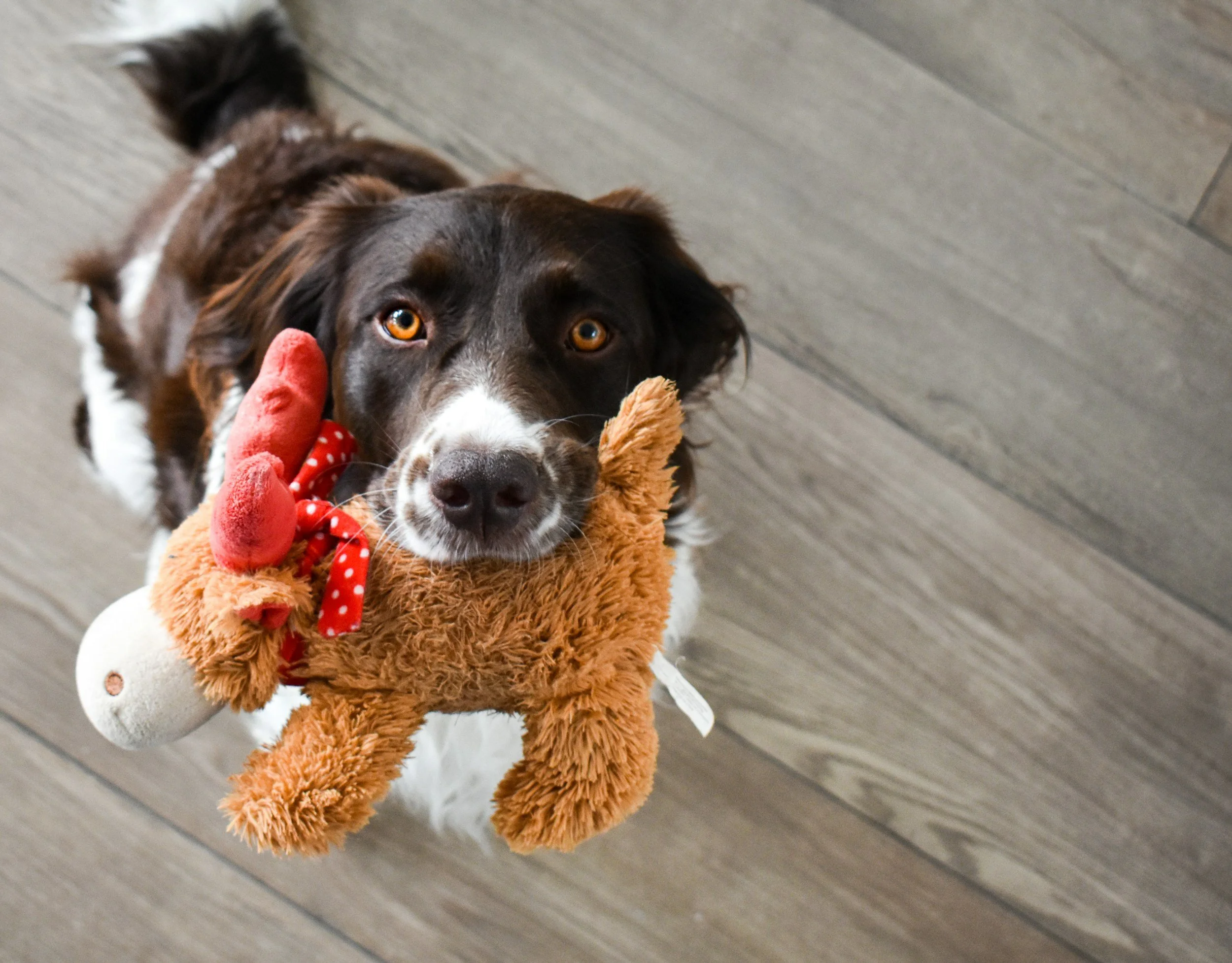
3. Give your dog opportunities to use their breed-specific instincts
This is something I think deserves much more attention when discussing enrichment.
Dogs have been selectively bred for generations to perform different jobs. Those genetic traits influence what they naturally find rewarding and how they interact with the world.
A Border Collie, a Labrador, a Terrier and a Belgian Malinois may all enjoy different activities, and understanding those differences can help us provide more meaningful fulfilment.
For example:
Scent hounds: Searching, tracking and following scent trails.
Gundogs: Retrieving, carrying and searching for objects.
Terriers: Appropriate digging, searching and activities that encourage problem-solving.
Herding breeds: Movement-based games, directional work and tasks that require concentration and handler engagement.
Working breeds: Structured obedience, scent work, purposeful toy play and activities that encourage problem-solving.
These are starting points rather than rigid rules. Individual dogs will have their own preferences, and it's important to consider their age, temperament, physical ability and experience.
The aim is to provide opportunities that tap into the behaviours your dog is naturally inclined to perform.
This doesn't mean you need to recreate the job your dog was originally bred for. It means thinking about what makes that individual dog tick and finding appropriate ways to fulfil those needs within a domestic lifestyle.
More enrichment doesn't always mean better enrichment
One thing I'd encourage owners to remember is that mental stimulation needs to be balanced with rest.
It's easy to fall into the habit of constantly looking for new ways to occupy our dogs, particularly when we're spending more time indoors.
But dogs don't need to be entertained every waking minute.
If your dog is already struggling to settle, becoming increasingly excitable or finding it difficult to switch off, adding more activities may not be the answer.
We need to consider their overall routine, including sleep, exercise, training, nutrition and opportunities to relax.
A good routine should provide a balance between activity and downtime.
Some days, a short scent search and a little structured play might be more than enough.
Make winter a useful training opportunity
Winter doesn't have to mean putting your dog's development on hold.
It can actually be a really good opportunity to explore activities that we might not otherwise prioritise during the busier summer months.
Whether it's introducing scent work, developing structured play or finding more appropriate ways to fulfil your dog's breed-specific needs, there are plenty of ways to provide meaningful enrichment without relying entirely on longer walks.
The most important thing is understanding your individual dog and recognising that mental stimulation isn't simply about keeping them busy.
It's about giving them opportunities to use their brains, engage in natural behaviours and develop skills that contribute towards a balanced lifestyle.
At ASCENDK9, I believe understanding your dog's individual needs is just as important as teaching obedience. When we get that balance right, we're in a much better position to help our dogs thrive.